
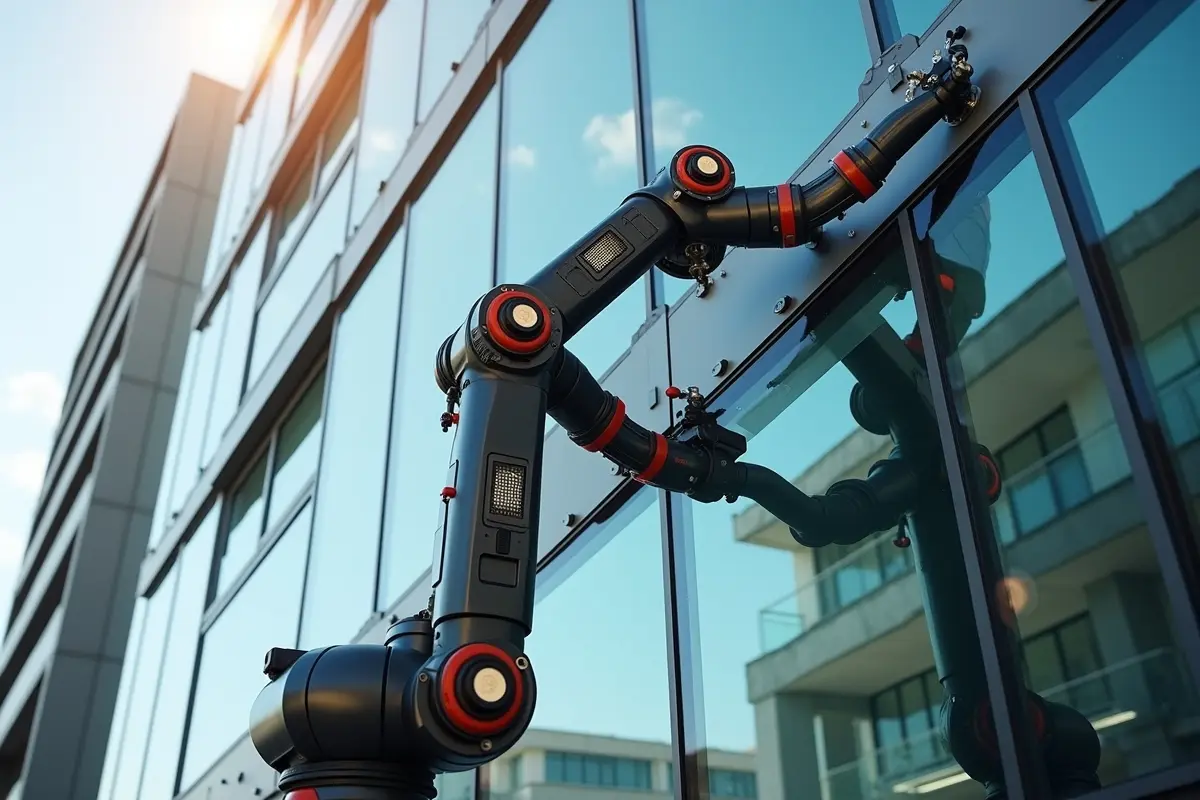
Building managers are stuck in the middle of two pressures that don’t negate each other – upward labor cost pressure and increased hygiene expectations from tenants, insurers, and regulators. Robotics is that intersection.
From reactive to proactive maintenance
For many years, building maintenance was based on a break-fix system. Something malfunctions, then someone is sent to repair it. It was acceptable when labor was inexpensive and people’s expectations weren’t as high. But that’s no longer the case.
Current cleaning and inspection robots are not only capable of performing their tasks but they also gather information as they work. For instance, a robot using LiDAR to map a business floor generates a map indicating which areas are used the most, which surfaces are deteriorating, and which areas require more or less cleaning. This is how predictive maintenance is added to what appears to be a simple cleaning job. Managers can instantly see how your building is functioning in reality.
As we move from a reactive to a data-based strategy, the whole planning and management process changes. Maintenance activities no longer revolve around the calendar but rather the current state of the building.
The financial model that makes it work
The technology is absolutely convincing. But the initial cost can be prohibitive for many facility managers. Enterprise-grade autonomous robots are expensive hardware, and hardware loses its value quickly when the software and sensor technology is advancing so rapidly. A machine that is considered state-of-the-art one day can easily be surpassed within a couple of years.
This is exactly why the conversation around why lease cleaning robots rather than buying them outright has shifted from a niche question to a standard procurement discussion. Leasing robot cleaning machines conserves capital, shifts the cost from capex to opex, and allows a facility to access newer robots without having to amortize and retire a product that by definition has a short lifecycle in the first place.
All told, autonomous adoption across hardware, sensors, and software in facilities management has the potential to reduce costs versus performing maintenance tasks on a purely manual basis, it’s simple economies of scale when you factor in that you don’t need to pay autonomous actors a salary.
Smaller commercial buildings, in particular, benefit here. Traditionally, they have not been able to afford the hardware of their enterprise cousins. Leasing changes this equation.
The difference between automation and autonomy
Past models of cleaning devices were somewhat autonomous – they followed a specific route and if they encountered an obstacle, they simply stopped. This is not exactly a sign of intelligence. This is more like following a script.
But now, we are experiencing real autonomy. Robots that implement SLAM technology are capable of understanding the robot’s position within a space that is always changing in real time. They do not only detect obstacles but classify them: A chair that is always in the same spot is different from a person that steps in the robot’s path for ten seconds. This decision-making is handled thanks to edge computing directly in the hardware itself. Therefore, there are no delays related to the device having to send data to the cloud and waiting for a response.
Smart buildings need smart equipment
Robotics doesn’t exist in isolation in a modern building. It’s part of an ecosystem that includes building management systems, access control, HVAC, and elevators. IoT integration means a robot can automatically open doors, request a lift between floors, or send a humidity reading to the building management system. These aren’t gadgets or gizmos – it’s what allows a single robot to travel and work across a multi-floor building.
That same level of integration also contributes to sustainability. A robot knows exactly how much water and chemical to use on every clean, and that data contributes to your green building certification and your company’s ESG report. So, if you’re a facility that wants to reduce their environmental footprint without reducing your cleaning standards, there’s now a very real way to make that happen.
Safety and the human role
One of the quieter arguments for robotic maintenance is the safety case. Robots handle UV-C disinfection cycles, reducing human exposure to the light-based systems used in high-hygiene environments like medical facilities and food processing areas. They can operate in spaces after hours, or in zones where air quality or chemical exposure would require protective equipment for human workers.
This is where cobotics becomes the right frame. The goal isn’t replacement – it’s reallocation. Human maintenance staff move away from repetitive, low-skill, physically demanding tasks and toward the high-judgement work that robots can’t do: client-facing service, complex technical repairs, relationship management with tenants. That’s a better use of people who are already hard to hire and harder to retain.
The buildings that will look the most capable in five years aren’t the ones with the most robots. They’re the ones that figured out how to deploy those robots within a financial model that scales, integrated them with the systems already in the building, and let human staff do the work only humans can do.

Leave a Reply
You must be logged in to post a comment.